What Happens When Teams Step Onto the Map? Inside the First teamscape Lab in Berlin
Mar 16, 2026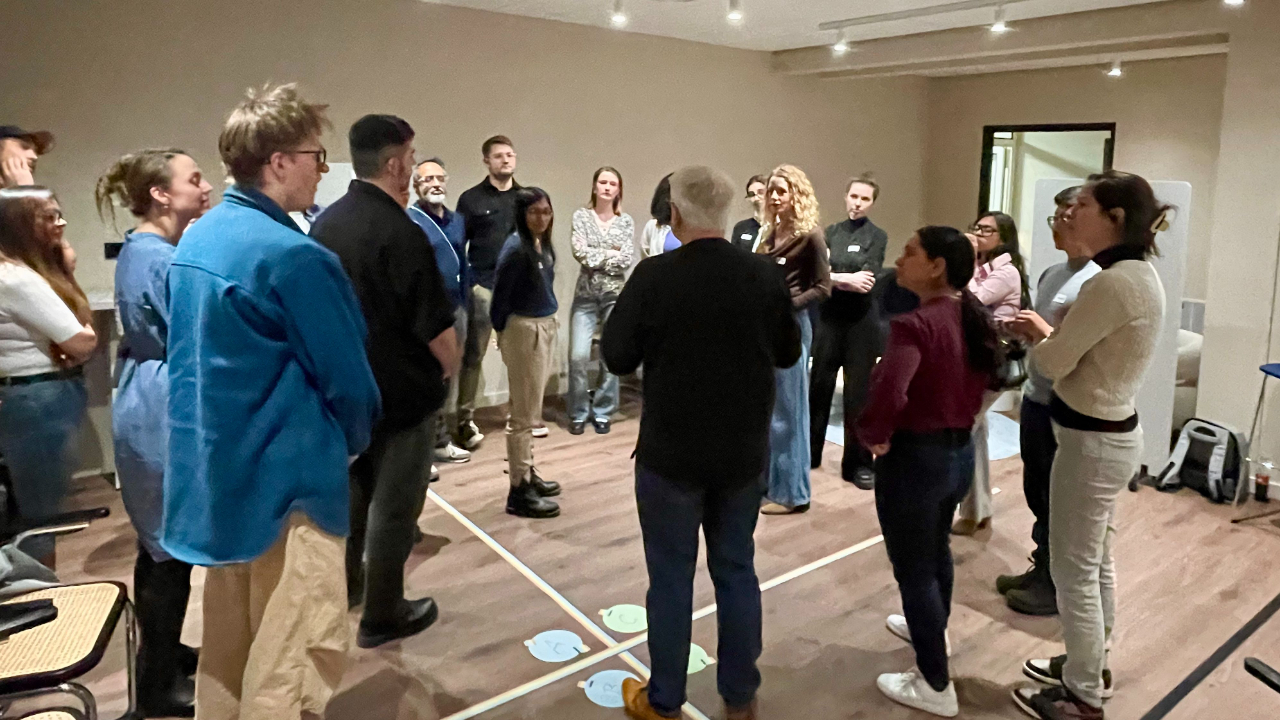
Tuesday night in Berlin, something unusual happened at ATworld's Alex1 Social Lounge.
There were no slides.
No presentations.
No panels.
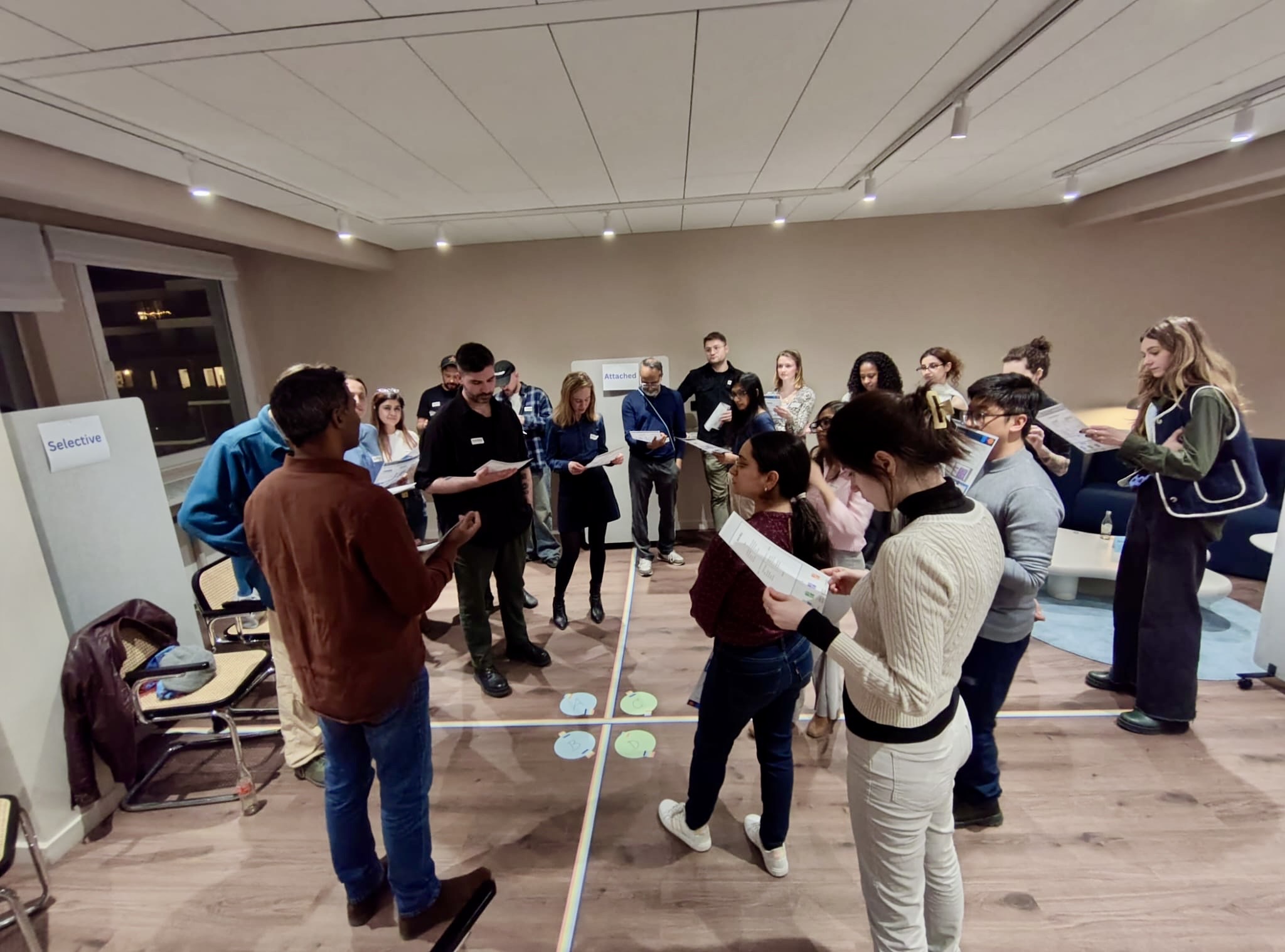
Instead, 20 professionals stood on a grid mapped across the floor, physically placing themselves inside a model of how teams actually make decisions.
This was the very first teamscape® Lab. A learning evening designed to explore teamwork through experience and engagement.
Within minutes, patterns began to emerge that many participants recognized from their own workplaces.
Why We Designed a Workshop Without Screens
Modern workplaces are saturated with information. Teams attend workshops, watch presentations, and leave with notes.
Yet behavior often stays the same.
The teamscape Lab intentionally flipped that format.
Rather than talking about deicision making in teamwork, participants embodied it.
People moved across the teamscape® grid, positioning themselves along the Decision Making dimension, discovering in real time how differently colleagues approach choices, conflict, and collaboration.
The absence of slides was intentional.
Because when people move, reflect, and interact physically, insights become personal instead of abstract.
The teamscape Decision-Making Model
During the session, participants explored how teams make decisions across two core axes:
1. Attached ↔ Detached
Emotional connection vs. analytical distance
-
Attached decision-makers consider relationships, impact, and human dynamics.
-
Detached decision-makers prioritize logic, structure, and objective analysis.
Neither is better — but misunderstandings arise when teams assume everyone evaluates decisions the same way.
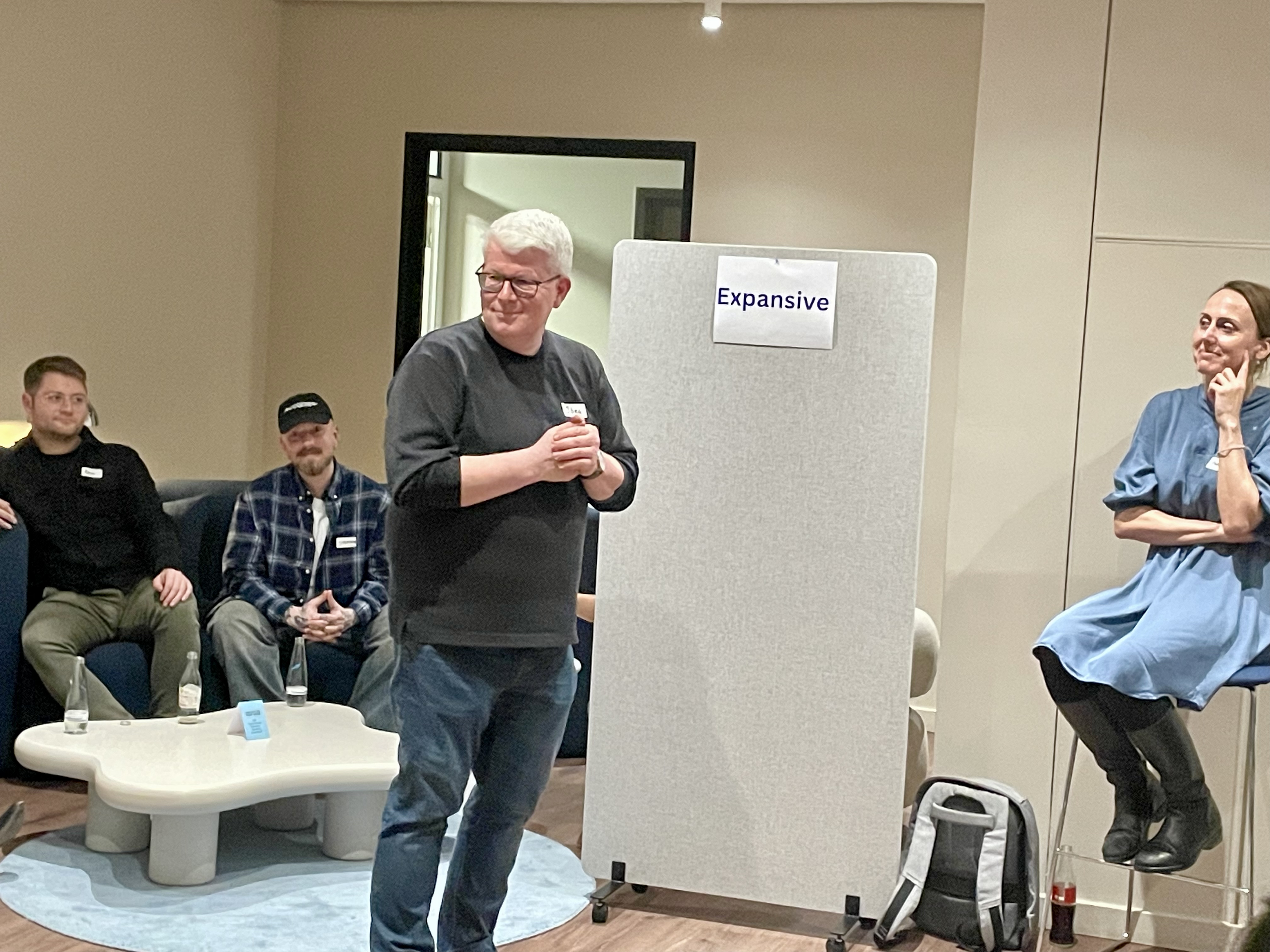
2. Selective ↔ Expansive
Narrow quickly vs. explore broadly
-
Selective styles focus fast, aiming for clarity and efficiency.
-
Expansive styles widen the conversation, exploring possibilities before committing.
Again, both approaches create value but friction appears when timing expectations differ.
The Big Insight: Resistance Is Often Misunderstood
One insight resonated strongly across the room:
"When someone pushes back on your decision, it is usually not resistance. It is a different decision-making style you haven’t bridged yet."
Participants began connecting this idea to recurring workplace challenges:
-
Meetings that never seem to reach closure
-
Feedback conversations that derail unexpectedly
-
Teams stuck between “moving too fast” and “overthinking everything”
As people repositioned themselves on the grid, many recognized why certain conversations in their teams keep going sideways.
The issue was not personality or motivation. Rather, it was unseen differences in decision logic.
A Fully Engaged Room
The session was facilitated by Jörg Schmitz, whose interactive approach kept energy high throughout the evening. Rather than lecturing, he guided participants through reflection, dialogue, and experimentation.
Heads nodded across the room as connections clicked into place.
Participants weren’t learning new jargon. They were recognizing familiar patterns, finally with language to describe them.
Community, Reflection, and a Different Kind of Networking
The teamscape Lab was also about creating space for meaningful connection.
A special thanks goes to Officeguru, who kept the food and drinks flowing, creating a relaxed atmosphere that encouraged open conversation.
The evening opened with a grounding sound bath session led by Paulina Coghen, allowing participants to transition from insight into reflection. A fitting introduction for an experiential learning format.
One attendee captured the spirit of the night perfectly:
“Very inspiring, making people reflect on themselves and how they work in teams. Time passed so fast because it was a super relaxed and engaged atmosphere. The networking with diverse, interesting people was the icing on the cake.”
Why Experiential Learning Matters for Modern Teams
Traditional team development often focuses on frameworks and personality labels.
teamscape takes a different approach:
-
Focus on behavior in context, not fixed traits
-
Make invisible team dynamics visible and discussable
-
Create shared language that improves everyday collaboration
When teams understand how decisions are made, not just what decisions are made, alignment becomes faster and conflict becomes productive.
What’s Next: The Next teamscape Lab
The strong response confirmed something important:
People don’t need more theory about teamwork.
They need experiences that help them see themselves — and each other — differently.
The next teamscape Lab, both in Berlin and online, is already in the works.
If you’re curious about joining a future session or bringing Teamscape to your organization, get in touch for upcoming dates and details or follow us for live updates.